
This information is intended to provide clarity and transparency to pupils and parents or carers about what to expect from remote education.
For details of what to expect where individual pupils are self-isolating, please see the final section of this page.
A pupil’s first day or two of being educated remotely might look different from our standard approach, while we take all necessary actions to prepare for a longer period of remote teaching.
We expect that remote education (including remote teaching and independent work) will take pupils broadly the following number of hours each day:
| Secondary school-aged pupils not working towards formal qualifications this year | KS35 hours of timetabled lessons20 minutes of reading Years 9 and 105 hours of timetabled lessons20 minutes reading 1 hour of home learning Year 123-4 hours of timetable lessons3-4 hours of independent study, research and reading |
| Secondary school-aged pupils working towards formal qualifications this year | Year 115 hours of timetable lessons2 hours of home learning or revisionYear 133-4 hours of timetable lessons3-4 hours of independent study, research, revision and reading. |
We recognise that some pupils may not have suitable online access at home. We take the following approaches to support those pupils to access remote education:
We use a combination of the following approaches to teach pupils remotely:
Feedback can take many forms and may not always mean extensive written comments for individual children. For example, whole-class feedback or quizzes marked automatically via digital platforms are also valid and effective methods, amongst many others. Our approach to feeding back on pupil work is as follows:
We recognise that some pupils, for example some pupils with special educational needs and disabilities (SEND), may not be able to access remote education without support from adults at home. We acknowledge the difficulties this may place on families, and we will work with parents and carers to support those pupils in the following ways:
Where individual pupils need to self-isolate but the majority of their peer group remains in school, how remote education is provided will likely differ from the approach for whole groups. This is due to the challenges of teaching pupils both at home and in school.
Camillle, boarder.
Read More
My name is Kate Armstrong, I’m in year 12 and I’ve been part of the Steyning Grammar School family for four years now.
Read More
I have really enjoyed my three years so far at SGS, I have taken part in my fair share of clubs and have enjoyed all of them.
Read More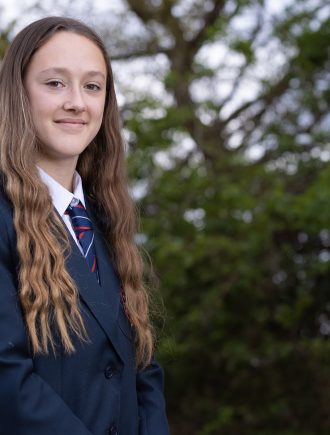
What I have loved about my three years so far at SGS are the brilliant resources and facilities. For example, I really enjoy the library at shooting field, which has a range of books and ebooks (which I can read on my iPad at home and at school).
Read More


